Sunday, October 21, 2012

Jack of All Trade - Master of Non!

While several of my friends knew what their calling way back when we were toddlers - I am yet to find out where I belong. I have always thought this was due to the fact that I am multi talented. But my friend Amalaye Oyakes comments about me on Facebook got me thinking...


By the way, Amalaye settled for exploring the celestial bodies ever since we left secondary school. So when I heard he was one of the big boys at NASA's Jet Propulsion Lab in Huston, I wasnt too surprised. But, why am I so confused? Whats my calling? Why haven't I settled down yet and focused on one career path? Am I a Jack of all trade... and master...? This comment made we think about my diverse interest, and how I came to be where I am.

  • My first love is music - I am a prolific entertainer - I once lead a brass band in my secondary school. I even went as far as playing on the same stage with world renowned Dizzy Gilespie (twice at the Port Harcourt Jazz festivals. Femi Anikulapo Kuti, Eddie Okonta, Gerald Opino, etc. I was given a scholarship to study music by the Nigerian Navy, but my father would have nothing of it. The only thing that kept me away from being a musician was education. I play (well I think I still can) all brass music instruments, from the Beagle, Trumpet, Trombone, to the almighty Tuba. I also play the guitar, and most wind instruments like the Clarinet. I have written several songs, but havent mustered the courage to enter a studio... yet.
  • Add caption
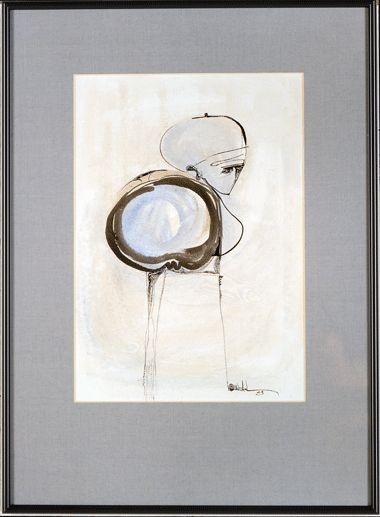
  •  I have always been an artist. I recall attempting my first drawing at five after watching my Dad draw a human head - I guess its in the blood, I picked up a pencil and tried to do just what I saw and the rest as the say is history. I exhibited my first art piece at the tender age of 15 at the United Nations sponsored art exhibition in New York.
  •  Being a science student in secondary school, I applied for Electrical Engineering & Architecture when I left secondary school. I got an offer to study Electrical Engineering at the Federal University of Technology Owerri FUTO. But that was not to be, cos my family thought I could do better to study art and be my own boss - I wish I didn't listen. I went on to study Graphic Arts at University of Nigeria. I recall my name was on the notice board when I resumed - my head of department wanted to meet this "Mad man" - I must have been mad to enroll for Fine & Applied Arts with Physics, Mathematics, English & Arts. I got an A in all with Arts been the lowest score. I guess I must have made an impression as Prof. Chike Aniako, Prof. Obiora Udechukwu and Prof. Ola Oloidi would become life time mentors.
  • Computer Graphics was a budding career path by the time I left University. In advert agencies of the time, studio heads had to depend on the skills of their "glorified" secretaries to bring their art creations into the digital world. As you may have imagined, this practice did not produce the finest results. With my love for computers, an inquisitive mind and a wealth of creative ability, I thrived in Ad Agency work. After a stink at three advert agencies - Dawn Functions, New Generation & Media Plus International, I realized that I felt like I was being used, while the products I churned out (calendars, Annual reports, Desk Diaries, Product advert, etc) were sold for millions, I got stipends. So I wrote a private proposal to Banks who were the major clients in the industry and voila, Afri Bank (now Main Street Bank) & NAL Merchant Bank Plc. (now Sterling Bank) took the bait. That's how I went to work as the in house Graphic Artist for NAL Merchant Bank.
  • One little known secret is that Graphic Artist helped make the internet what it is today. After Sir Tim Bernes Lee created the hyper-text protocol in 1993 (the http:// you find before the www web url) that changed the aparnet (as it used to be known) to what we now call the internet, Graphic artist were the first group of professionals to apply their visual creations... I consider myself one of Nigeria pioneers having built my first website in 1994.I also designed NALs website in the early 1990s when very few Nigerians knew what the internet was.
  • As the internet grew in complexity, I grew with it. My simple HTML pages designed with WYSIWYG applications gave way to more mature web programming languages like ASP.net, SharePoint, etc. With several web development and other professional certifications under my belt, I gracefully transited to being called a web developer. Even went on to design the nations Central Bank of Nigeria internet, intranet and extranet websites.
  • As you can imagine, web development is not a core function for banking - so the promotions were not coming as fast, and after 10 years of creating the web communications office and administering an army of content managers, one think stuck out like a sore thumb. "But... you are an artist" was becoming a derogatory statement I couldn't bear anymore. and so even-though I really wanted to study Human Computer Interaction HCI to prepare myself to join the now thriving Nollywood movie industry, I was forced to study Information Systems in Manchester University, United Kingdom.
  • On my return from studies, along with my Project Management PM skills and certification, I jumped into the deep end of project management pool. The PM skills was to see me working on the banks Cashless Nigeria initiative. I had reinvented myself once more.
So while I am sitting here thinking I have derailed a million times already - Amalayes comments clearly shows that my electronics and inventing talents has taken a back seat. If the climate was right, I should be an industrialist and inventor.Its always reassuring to hear your friends describe you in ways you never imagined. I recalled Amalaye near fatal electrocution at my house in the late 1980's when he tried to test my Door Zapper! a device I put in place to detar buglars who had hit my room a few weeks prior to his visit. His recent visit to Nigeria last month may have well Zapped me back to life - I should make plans to attend the exhibition, perhaps, this time, I may have finally settled down cos a rolling stone gathers no moss.


Thursday, September 27, 2012

A Presidents OK should stand for something!


Two days ago, the President of the federal republic asked the Central Bank of Nigeria to stay action on the proposed restructuring of the nations currency - the Naira. While his action may have put to rest, the widespread uproar in the polity fueled by what I can only describe as MIS informed "Ojuolegba" economist. Though I'm not a subject matter expert, I have listened to erudite economist on the same topic. Much so that the Presidents actions angered me... For a knew this policy was aimed at more gain than pain.

Aigboguns article "The Presidents OK should stand for something" caught my eyes in BusinessDay of the 21st Sept. Read on....

This is a very sad day for Nigeria. " President Goodluck Jonathan has collectively made every Nigerian look small by his capitulation. By withdrawing his approval to the Central Bank to introduce the N5000 notes, the president set a very dangerous precedent, regardless of the argument for or against the policy. And by this his singular act, he has unwittingly reduced the office he swore to protect and given the world cause to doubt if they can do business with his government.  

It is not for nothing that the state governors insist on using a red ink pen in their official communication. And it is also not for nothing that the president uses green to write. It is because of their exalted offices. It is because it is expected that the president's approval will stand for something.

Presidents must at all times listen to their people but a leader must also be able to make up his mind and be ready to defend his position. That is the covenant he has with those he has to lead. It will be unthinkable that the president's U-turn should meet with the approval of serious Nigerians.  

What should the world now think of us? That our president cannot sign a bilateral agreement with other leaders of the world and hope to keep the bargain? Who on earth will take Nigeria serious if this were to be the case?  

At the time of their choosing, the people will always have their say, and by the constitution' also have their way at least once every four years. Presumably, this president consults before coming to a decision, and one Just hope that he did just that before consenting to the apex bank's recommendation to proceed with the N5000 note.  

After this, the people can chose to have their say. And the president should not have to play to gallery all the time, especially because economic policies do not always have to be based on popular opinion. And it is why Spain, Greece and even the United Kingdom are all pursuing austerity policies today, to the chagrin of their people.  

This is so because governments and those privileged to lead them do not just have to think about what the people will say today. They must focus more on their place in history because what is public good can sometimes appear blurred in the midst of an unorganized debate. It is in this light that I held a different view on the petroleum subsidy withdrawal debate. Which is that any subsidy on consumption rather than production, any subsidy which exports jobs elsewhere is bad, no matter what it is called by.

It is also for this reason that I took exception to the opposition to the decision by President Obasanjo and Okonjo Iweala to invest $12bn or so in the landmark deal to end Nigeria's excruciating foreign debt. It is for this same reason in the early nineties when I was secretary of the Nigeria Guild of Editors, I sought to get my colleagues to dialogue with leaders of the private sector who were at the time canvassing a government policy permitting entry or participation of the private sector in Nigeria's telecommunications sector. Today editors who virulently opposed that policy are carrying one or two and in some cases three phones in their pockets.  

It is for this reason that I respect my mentor and bene¬factor Professor Pat Utomi who in the heat of that debate had maintained that if the only way to get the private sector in meant allowing Abacha to allocate all the GSM licenses to his family he will vote for it, knowing that as he rightly said, a time will come when Abacha's children or grandchildren will be forced to sell some or all the licenses to other Nigerian investors. It is also for this reason that I yet cannot find common ground with my friend Joe Ajaero who worked with me many years ago at the Vanguard but is now eading the electricity workers union to oppose the privatization of the moribund state ppwer company, PHCN.  

In Nigeria of 160 million people, everyone is a Central Bank Governor and every one seeks to have a view on government policy, regardless of how uninformed he or she might be. The road transport workers union leaders weighed in to be heard on the N5000 note issue. Even the okada riders also wanted to be heard. Unfortunately, many who should know, sought to side track the truth while the debate lasted just to be seen to oppose the policy simply wanted to be heard or because they have become, members of the opposition. Or perhaps as was the case of the legislators, it had to do with Sanusi who had the courage to say they did not have to bleed the national treasury dry by insatiable quest for higher pay in a nation where millions wallow in abject poverty.  

In all of the debate, one thing is clear. There is no respected body of opinion to suggest the view that the introduction of N5000 notes will bring' about the doom some said it was capable of causing. I am led by common sense, which teaches me that it is more cost effective to print one N5000 note instead of printing five NIOOO notes, as is the case today. It will also be cheaper to transport, store and use one N5000 instead of five N1000 notes. And what is more, I do not have to use or carry a N5000 note if it does not serve my purpose.  

Central banks around the world will not get into a debate of what currency notes to issue. They just go on to print it and announce its introduction when it is ready. Sanusi should have done exactly this and it is a pity he did not. After this, one must hope that we all accept that good leaders and those that Nigerians need, are not leaders who just pander to public opinion but those who are capable of reaching out with the clarity of their vision and the power of their thought to that future which the people may not yet see today' .    

Aigbogun is Publisher of BusinessDay and it is his second ever opinion piece submitted to a newspaper since entering journalism in 1982.   That our president cannot sign a bilateral agreement with other leaders of the world and hope to keep the bargain? Who on earth will take Nigeria serious if this were to be the case?