Showing posts with label Naija Stress. Show all posts

Tuesday, April 28, 2020

Inexpensive Smart TV - Part 2

Okay I have been bored stiff from the Covid-19 lockdown situation in my country and need something worthwhile to keep busy. The thought of streaming vides came to mind an a new project was borne. This video plug is the second part to my initial video on what to order for the project as seen here. If you haven't ordered your parts yet you can do so on eBay or www.360hub.com.ng

We need to install a barebone operating system called LibreELEC on the Raspberry Pi, Kodi is a sophisticated media centre that will run on this Operating system and facilitate process of running and managing our smart TV. If that sounds technical, don't worry, much of the work has been done by experts and you only need to configure a few things.


The first thing we will do is to burn the LidreELEC Image on the SD Card. Follow the video below and leave comments for help. Next step will be connecting the TV and starting the Raspberry Pi for the first time.

Please share and subscribe to my channel to encourage me keep this vlog open.

Thursday, September 5, 2013

Baked to Death in the Sahara

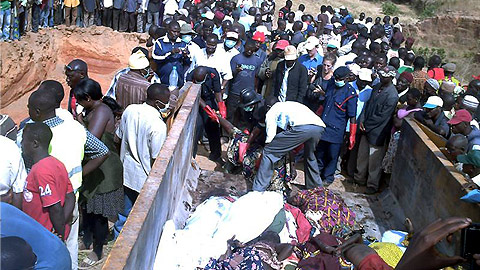
I stumbled on a video (https://www.facebook.com/photo.php?v=691603344188871) posted on FB showing scores of dead Nigerians in the baking heat of the Sahara Desert. The eerie video was no different from a similar one on Nigerians marooned and isolated in the Sahara en route Europe aired by CNN recently.


I once talked a GIRL from embarking on this trip in 1994. She had the list of all the safe houses and pass phrases including the fees and brief for migrats who wish to go on this journey through Benin – Togo – Ghana - Boukina Faso-Algeria – Europe. She said it was full proof and she knew many who had made it to Europe. I thank God she listened to me and is now happily married and still lives in Lagos.

Emmanuel Mayah, the renowned award winning investigative journalist documented the travails of migrants in his exposé Europe by Desert: Tears of African Migrants. in a recent interview he said “Nigerians are being executed in Libya; many have perished in the Sahara while trying to cross the desert on foot; many have drowned in the Mediterranean Sea trying to cross from Morocco to Spain and hundreds of thousands of Nigerians are in prisons in different countries. Many are at a point of no return; they have no money to buy food let alone transport themselves back to Nigeria.”

So from the above, it’s a known fact that Nigerians go on this trip and from various routes all across West Africa, but I am a bit worried about this video. It raises a few questions. How can all these men slump and die at the same time, within the same area? Even more worrying is the fact that the dead all seem to be bent over hiding their faces - as if they were been robbed or hiding from someone/something. Since there is no evidence of blood, I will eliminate gun shots but what about poison? Another worrisome issue is how the nationalities of the individuals were ascertained. The clothes worn by the deceased do not seem to originate from Nigeria (debatable). To me they look like those worn by our other west African neighbors.

I ask these questions because from that same document I mentioned earlier, I learned that locals from the communities migrants pass through despises these migrants, especially as the local operators are usually the same people that organize other vices in these same communities - gunrunning, smuggling, armed robberies, child trafficking, name it. Similarly, the locals are also very aware of the large sums of money they carry (usually US$). In fact their handlers have been known to rob migrants and drop them off in the middle of the desert to die. This is well documented by Aljazeera, CNN, BBC, and you can watch all this on youtube… watch the video -

While one can easily dismiss this all by saying the migrants are to blame. Why should Nigerians, especially the (Igbos including Delta and Edo states) continue to rub our name in the mud? Why do they think that they must seek greener pastures at all cost? Some have been known to “Sell all that they own to secure a bleak chance in a foreign country only to reach there and end up hawking / Hooking on the street in J’boug, Italy, Israel, Turkey, etc. These questions are debatable, but I blame the state, our leaders and the Federal Government. Nigerians are scattered all over the world, most of them struggling to earn a living in communities that loathes them. The federal government should look into these issues and ascertain or verify the events that led to the death of these people with a view to curb the trend.

To my mind, if our communities are made more habitable, if there is better transparency, if our leaders are more responsive to our cries, if there is more security of lives and property, then and only then will our people stop seeking greener pastures. What is your take?
 

Wednesday, August 28, 2013

Delusions in Christian Parishes

Only this morning (28th August 2013) my attention was drawn to Pastor Biodun Fatoyinbo unfolding saga making rounds on Twitter and other social media channels. Ms Ese Walters had published an expose accusing the Common Wealth of Zion Assembly (COZA) of manipulating her sexually / spiritually.

As usual, rather than concentrating my article on this particular event, I will look at the big picture. Let us come away from the tree and look at the forest.

There are countless number of reported cases of rape that go unpunished because no victim is ready to speak up. Even when the victims speak out against their assailants, they are often slandered and even threatened. This has forced many victims to suffer undue hardship trying to pretend normalcy while the world around them continues to bask in the euphoria of our pretentious society.
This would not be the case in other societies.

I read Ese's story on her blog - http://esewalter.wordpress.com/2013/08/22/my-affair-with-pastor-biodun-fatoyinbo-of-coza/#comments and was perplexed to read what Nigerians had to say about her ordeal. Rather than empathizing with her, or investigating the matter, Nigerians had resorted to calling her names and blaming her for her ordeal. Typical you say. We (Nigerians) blamed the ABSU gang rape on the victim http://www.cknnigeria.com/2013/08/identity-of-2011-absu-gang-raped-victim.html When the news broke and the video went viral the reaction of Nigerians was more about verifying the location of the crime scene and absolving their university rather than empathizing with the victim and bringing the perpetrators to book.

This is further exuberant when we add religion to the mix. Ese’s present predicament is reminiscence of another Nigerian pastors escapade in 2011. I recall watching a series of BBC documentary on African demons and deliverance in the Untied Kingdom. The series focused on tackling the belief system that African parents pass onto their British born children. The documentary consisted on in-debt studies and carefully planned stings aimed at documenting evidence that may convince the people. In one of such stings, a Nigerian mother visits a particular Redeemed Christian Church in London. She complains to the resident Pastor that her teenage British born daughter is “Acting up”. Readily without prompting, the pastor assures the woman that the girl is possessed and would require spiritual deliverance. After agreeing to make a voluntary contribution to the church after the deliverance is complete, the young girl is invited to attend a bi-weekly session run by the pastor. Before long, lured by the beauty of the girl, the pastor makes advances. Armed with audio and video recordings of the stings, the producers create a short account and randomly select 10 people from the parishioners to watch the video after the Sunday service, but are surprised that not one of them is bold or inquisitive enough to watch the whole 15mins video. Shouts like “Touch not my anointed!” ring out.

This same hypocrisies don’t only inhibit us as a people, but indulges perpetrators to carry on with impunity. Why can’t we look at the issues and forget about the players. Why do we avoid the truth and focus on self preservation. Why have the authorities remained silent in all this.
•    Unresolved cases of rape in Nigeria
•    Men raping their daughters
•    Public officials rape the nations treasury
•    Child marriages

Work in progress...

Wednesday, March 6, 2013

Co-operation, no be competition - By Pa Monday

Yeah wondering where I have been all this while? Well the project to gracefully convert Nigerians to utilize electronic means of settlment has proved tough. For the past 12 months or so, I have been slaving away at it. first begining with the pilot in Lagos, and now planning to roll out to 6 more locations in Nigeria.

I miss writting but I thout to break the silence as I read my very good friends blog which has been published on at http://premiumtimesng.com/opinion/122934-co-operation-no-be-competition-by-pa-monday.html#disqus_thread he write...

Even we small people dey do our own. Sotay we get generator wey we dey call ‘I better pass my neighbour’. That name alone don show how bad this spirit of competition dey. If you on your generator, connect light for your neighbour, na bad thing? Dat neighbour fit contribute to buy fuel na. Why house of 10flats go get 10generators?


I have always wondered why we are in such a mad rush on several fronts, but I never really saw the parallels with other bizarre things going on around us. Kudos Pa Monday, this is a brilliant Article on our percived bad sense of competition.,. even better is the genre - pidgin sets a very clear perspective to view Nigeria from.


Thursday, September 27, 2012

A Presidents OK should stand for something!


Two days ago, the President of the federal republic asked the Central Bank of Nigeria to stay action on the proposed restructuring of the nations currency - the Naira. While his action may have put to rest, the widespread uproar in the polity fueled by what I can only describe as MIS informed "Ojuolegba" economist. Though I'm not a subject matter expert, I have listened to erudite economist on the same topic. Much so that the Presidents actions angered me... For a knew this policy was aimed at more gain than pain.

Aigboguns article "The Presidents OK should stand for something" caught my eyes in BusinessDay of the 21st Sept. Read on....

This is a very sad day for Nigeria. " President Goodluck Jonathan has collectively made every Nigerian look small by his capitulation. By withdrawing his approval to the Central Bank to introduce the N5000 notes, the president set a very dangerous precedent, regardless of the argument for or against the policy. And by this his singular act, he has unwittingly reduced the office he swore to protect and given the world cause to doubt if they can do business with his government.  

It is not for nothing that the state governors insist on using a red ink pen in their official communication. And it is also not for nothing that the president uses green to write. It is because of their exalted offices. It is because it is expected that the president's approval will stand for something.

Presidents must at all times listen to their people but a leader must also be able to make up his mind and be ready to defend his position. That is the covenant he has with those he has to lead. It will be unthinkable that the president's U-turn should meet with the approval of serious Nigerians.  

What should the world now think of us? That our president cannot sign a bilateral agreement with other leaders of the world and hope to keep the bargain? Who on earth will take Nigeria serious if this were to be the case?  

At the time of their choosing, the people will always have their say, and by the constitution' also have their way at least once every four years. Presumably, this president consults before coming to a decision, and one Just hope that he did just that before consenting to the apex bank's recommendation to proceed with the N5000 note.  

After this, the people can chose to have their say. And the president should not have to play to gallery all the time, especially because economic policies do not always have to be based on popular opinion. And it is why Spain, Greece and even the United Kingdom are all pursuing austerity policies today, to the chagrin of their people.  

This is so because governments and those privileged to lead them do not just have to think about what the people will say today. They must focus more on their place in history because what is public good can sometimes appear blurred in the midst of an unorganized debate. It is in this light that I held a different view on the petroleum subsidy withdrawal debate. Which is that any subsidy on consumption rather than production, any subsidy which exports jobs elsewhere is bad, no matter what it is called by.

It is also for this reason that I took exception to the opposition to the decision by President Obasanjo and Okonjo Iweala to invest $12bn or so in the landmark deal to end Nigeria's excruciating foreign debt. It is for this same reason in the early nineties when I was secretary of the Nigeria Guild of Editors, I sought to get my colleagues to dialogue with leaders of the private sector who were at the time canvassing a government policy permitting entry or participation of the private sector in Nigeria's telecommunications sector. Today editors who virulently opposed that policy are carrying one or two and in some cases three phones in their pockets.  

It is for this reason that I respect my mentor and bene¬factor Professor Pat Utomi who in the heat of that debate had maintained that if the only way to get the private sector in meant allowing Abacha to allocate all the GSM licenses to his family he will vote for it, knowing that as he rightly said, a time will come when Abacha's children or grandchildren will be forced to sell some or all the licenses to other Nigerian investors. It is also for this reason that I yet cannot find common ground with my friend Joe Ajaero who worked with me many years ago at the Vanguard but is now eading the electricity workers union to oppose the privatization of the moribund state ppwer company, PHCN.  

In Nigeria of 160 million people, everyone is a Central Bank Governor and every one seeks to have a view on government policy, regardless of how uninformed he or she might be. The road transport workers union leaders weighed in to be heard on the N5000 note issue. Even the okada riders also wanted to be heard. Unfortunately, many who should know, sought to side track the truth while the debate lasted just to be seen to oppose the policy simply wanted to be heard or because they have become, members of the opposition. Or perhaps as was the case of the legislators, it had to do with Sanusi who had the courage to say they did not have to bleed the national treasury dry by insatiable quest for higher pay in a nation where millions wallow in abject poverty.  

In all of the debate, one thing is clear. There is no respected body of opinion to suggest the view that the introduction of N5000 notes will bring' about the doom some said it was capable of causing. I am led by common sense, which teaches me that it is more cost effective to print one N5000 note instead of printing five NIOOO notes, as is the case today. It will also be cheaper to transport, store and use one N5000 instead of five N1000 notes. And what is more, I do not have to use or carry a N5000 note if it does not serve my purpose.  

Central banks around the world will not get into a debate of what currency notes to issue. They just go on to print it and announce its introduction when it is ready. Sanusi should have done exactly this and it is a pity he did not. After this, one must hope that we all accept that good leaders and those that Nigerians need, are not leaders who just pander to public opinion but those who are capable of reaching out with the clarity of their vision and the power of their thought to that future which the people may not yet see today' .    

Aigbogun is Publisher of BusinessDay and it is his second ever opinion piece submitted to a newspaper since entering journalism in 1982.   That our president cannot sign a bilateral agreement with other leaders of the world and hope to keep the bargain? Who on earth will take Nigeria serious if this were to be the case?  

Monday, April 2, 2012

Government Institutions VS the Cloud

Executive Summary
Cloud computing is the new buzz word on the internet and seen as the key to the future of IT services. Because it is still an emerging trend, its definition is still a bit hazy, however the cloud is simply a virtual data center shared by several organizations. Cloud applications involve multiple customers sharing application, even though they only have access to their own data.

No doubt, there are several business intelligence advantages derivable from operating in the cloud that allows for powerful combination of high-assurance remote serve integrity and cryptographic protocols that are consistent with policies, whether within the enterprise or in the cloud. To the most part, they mostly lend themselves to small and medium scale corporations who want to save money and infrastructure. Yet these advantages do not at this point in the maturity matrix of cloud sourcing, out-weight the inherent dangers of adopting such an emerging trend for public regulatory institutions such as Central Banks.

These inherent dangers underscore the well documented fear of being at the “Bleeding Edge” of technology. Complications experienced by early adopters of emerging trends in IT are well documented. Cloud computing has unique attributes that are fraught with security risks, smart customers should err on the side of caution and reappraise their dream of being on the Cloud.

This paper explains in simple terms, the idea of the Cloud sourcing, the advantages accruable to implementing it, against the backdrop of recent developments and Federal Governments desire to adopt a portal service hosted on the cloud. It also details the pit falls and explains why other public and government institutions have shied away from doing the same.

Cloud computing has unique attributes that require risk assessment in areas such as data integrity, At the forefront of this challenges is that of the security of sensitive data and information stored in countries where we have no legal jurisdiction on how these data is used or managed.

There is no better cautionary statement to set the tone like

“I am nervous to host corporate information on someone else’s server? Yes, even if its Google” – Shukry Tiab. There are several reasons experts’ advice caution in moving to “cloudosphere”. Some identified risks include;
  • Loss of service if your provider has downtime or goes out of business.
  • Regulatory problems when critical data is stored internationally.
  • Security concerns when users lose control of how their data is protected.
  • One-sided service agreements that give clients little redress in the event of a calamity, acquisitions, etc.
  • Lock-in dependency on proprietary cloud applications.
Early on in the evolution of any new technology, there are concern about how it will be used. These concerns are what is termed “Privacy Hump” – they represent a barrier to the acceptance and adoption of a potentially intrusive technology… if the business case for the technology is strong, the hump may fade over time – that time has not come yet for Cloud sourcing and the Government Institutions.

Preamble
In furtherance of its mandate to provide support to the Board of an apex regulator through the monitoring of the decisions of the Board and assurance of the highest level of oversight for internal and public complaints and managing, (from creation to archival), all their documents. The Department that manages the Board recently launched a portal service for the Board.

This portal designed by messers Digital Board Book Limited is accessible via the internet to all members and accords them the ease of collaborating with other members regardless of where they are in the world.

While these may be laudable objectives, we are of the opinion the regulator may have inadvertently by coerced into approving the deployment of sensitive Board decisions to the Cloud. The paper tries to draw the attention of the regulator to the huge risk associated with the cloud and government sensitive information. More especially as the President of the federation has recently directed that a similar portal be developed for the Federal Executive Council (FEC) for the Government.

Introduction
What is the Cloud?
Ostensibly, most people think the cloud is the same as the internet. The name cloud is inspired by the cloud symbol often used to represent the internet in diagrams and workflow, but that is where the similarity ends… it is more complicated than that.

The definition of the cloud is still hazy, but the Guardian defined it as “a means of putting more of your materials out ‘there’ and the less on you PC or Server” while the US National Institute of Standards and Technology defined it as “a model for enabling convenient, on-demand network access to a shared pool of configurable computing resources that can be rapidly provisioned and released with minimal management effort or service provider interaction”.

These services are broadly divided into three categories;
  • Infrastructure-As-a-Service (IaaS),
  • Platform-as-a-Service (PaaS), and
  • Software-as-a-Service (SaaS)
Early on in the life of any technology, there are concern about how these technologies will be used. These concerns are what is termed “Privacy Hump” – they represent a barrier to the acceptance and adoption of a potentially intrusive technology… if the business case for the technology is strong, the hump may fade over time – that time has not come yet for Cloud sourcing and the Government Institutions.

Who is the Cloud meant for?
It is perhaps too easy to start using a cloud service – that’s exactly how it is designed to be. It is easier to setup a Yahoo, Gmail, or American Online account than installing and running an exchange server. However, while the later is more expensive to maintain, it can be easily controlled to protect sensitive data for an enterprise. – Cloud sourcing easily lends itself to small, medium companies who do not wish to incur, waste or underutilize resources, be it monetary or otherwise.

Presently cloud computing is been embraced by private businesses as a means of saving cost on computer hardware. Cost saving has been identified as the single most important factor for cloud computing services. Most public institutions are slow in embracing the technology as there has to be a strong case of cost savings aligned to security of sensitive data.

What is preventing its early adoption?
Security of sensitive data remains the major concern for public institutions the world over. One myth that cloud computing is sold on is that though it is a shared service, it can be implementation independent. But in reality, due to the “Openness of the Internet” and its inscribed transparency, industry regulatory compliance is another kettle of fish. The following section summarizes the challenges of adopting Cloud sourcing.

Current Concerns
The question is, can multi-tenant services ever be as secure as your own server? Concerns are beginning to grow about just how safe an environment the cloud is for holding sensitive data and information. Analysts warn that the cloud is becoming particularly attractive to cyber crooks. Reformed hacker, Michael Calce agrees that trouble looms ahead if companies fail to apply the right security measures.

Standards & Regulations
There are No Regulations and Standards when using or implementing cloud computing due to lack of long-term experience. This exposes other unique challenges such as follows:-

Privileged User Access.
Sensitive data that is processed outside the enterprise brings with it an inherent risk that it may fall into the “wrong Hands”. The most prominent issue in cloud services is security of user data as the user has no control over its business data files containing valuable information. This is because a proper security model for cloud computing has not yet been developed.

Contractual Obligations
Managing problems with another companies infrastructure is not practical due to a mis-alignment of interests. I cite Amazons “Non-Assertion” terms of reference. Other contractual gaps are:-

  1. Dependency:
    Cloud services make the user totally dependent on the Cloud Service Provider. The user is denied control on quality and maintenance issues and plays no role in back up and disaster recovery activities. They level of dependency is so high that the user existence is tied to the financial health of the cloud service provider. If the CSP goes under, the user’s business goes with it. This lack of control means that if a user decides to terminate his contract with the service provider, there is no way the user will ensure the provider does not retain his data in his database.
  2. Data/Information Location
    Another security issue is that physical location of hardware and software is unknown making site inspections and audits difficult.
  3. Cost and Flexibility:
    There is presently no customization of product as the whole essence is for many businesses to store data within the same environment. There is also the likelihood of hidden cost such as compliancy regulations, backup, restore, disaster recovery and problem solving costs been introduced by the CSP.
  4. Legislation:
    Users of cloud services don't know where their information is held which raises the question of loyalty by the Cloud Service Provider. The danger this poses can be highlighted by considering the America laws such as the US Patriot Act which empowers government and other agencies to access information including that belonging to companies as long as this information is held by companies operating within the United States. A subpoena or legal action can compel a cloud provider to give up sensitive information/data. This is further exuberated by the widespread use of freedom of information acts in the west.

    It also entails that critical information could be moved across boundaries without the knowledge of the user. Legal implications of data and applications being held by a third party are complex and not clearly understood. Potential risk of giving up sensitive data due to transparency.

    Contractual commitments to obey local privacy requirements across international jurisdiction is a burning issue for providers of sensitive information.
  5. Long-term Viability:
    Moose law suggests the fast pace of technological development, with cloud in its infancy, and there are little known information about the requirements and conditions for implementing and managing service level agreements contracts with CSPs. This hands the advantage to CSPs and exposes the user in case of disagreements in SLA. chances are that CSP will increase, small providers maybe bought over by new ones, leaving clients with few options.
  6. Provider Espionage:
    Espionage may not seem like a threat to a public regulatory institution, But it is however expedient that confidentiality and availability of the data and information be assured at all times.
    Data in the cloud is typically in a shared environment with other customers. Enforcing encryption across such a complex terrain is impractical considering that other customer may want avoid it due to its disruptive nature.

    Auditability of a distributed and dynamic application spread all over the globe is not practical and may not satisfy auditors that data is properly isolated and cannot be viewed by the wrong persons. One popular audit guideline is tha SAS 70 – it defines guidelines for the assess internal controls over processing of sensitive information. Other guidelines like the SOX and HIPAA. US government agencies are mandated to follow these guidelines.

    There have been well publicized accounts of cloud outages, down time of critical applications and services. When compared to traditional forms of investigative support, forensics in the cloud face huge difficulties if even possible. The scale of the cloud and the rate at which data is overwritten is of concern due to the logging and data for multiple customers often co-located and spread across an ever changing set of host and data centers.
Suggestions on The way forward:
The Board Book Portal Project has come a long way, a compelling business need that justifies its creation are well noted, however it is clear that the proper project initialization processes have not been followed leading to the unwitty decision to host on a public cloud. It is therefore expedient that a more detailed look is taken at the portal to ensure that sensitive board decisions are protected. This is even more crucial as the Presidency has muted its desire to adopt the same portal service for the Federal Executive Council of Nigeria.

We therefore recommend as follows: The legal and IT departments of the regulator conduct a due diligent exercises; Read and fully understand the legislation, reasonability and terms of both providers and users in case of loss of sensitive data.

Create Internal/Private Clouds or utilities:
The quest to use the Cloud is on for several public institutions, Most countries opt for a private cloud with more consistent and controlled governance to mitigate the identified risk enumerated above.

The UK government is setting up its own cloud to make savings of up to £3.2bn – a 20% reduction in costs. The UK government is working to build its own secured cloud called GCloud while the US government is working to build its own cloud called GovCloud. Both governments are avoiding the commercial environments primarily because of security concerns. Both governments have also identified savings of over $3b in computer hardware and software purchases over the next few years.

According to the analyst Gartner – the first step before committing to cloud source is to Seek security assessment from a neutral third party to assess the security risks associated with the present CSP. An external IT audit may signal how secure these cloud providers facilities are, and will no doubt suggest how trivial information should be published on the portal.

Proper project initiation processes be followed for all strategic projects such as this. This will ensure that all stakeholders are carried along and properly enrolled, as it has a significant impact on the quality of the project execution.

Government should determine security and privacy requirements, develop standards, gather data, and benchmark costs and performance against risks and trust.

Conclusion:
Cloud computing technologies have not reached maturity. Users are at the mercy of their cloud service providers for the availability and integrity of their data. Presently cloud computing is been used mostly by private firms, while public sector explores creating private Cloudscapes to protect sensitive government information.

In order for government institutions to embrace cloud technology, there is need to determine the business needs and benefits of cloud services and its fit with our policies, processes and legislation.

Thank You.

Friday, March 23, 2012

The Harmonization of Salaries in the Federal Civil Service

As I have always maintained. Democracy, as practiced in the world today, is too expensive. Lets join the rest of the progressive world who are seriously trying to apply technology to bring government closer to their people - Direct Governance.

You may recall that on December 20th 2010, on the heels of Sanusi Lamido Sanusi, Governor of the Central bank revelation that the National Assembly appropriates over 25% of the national budget. I published an article titled Who Let The Dogs Out and Say No to looting of Nigeria. Both articles addressed the gulf between the rich and the poor and reflected on my view on "A Promise is comfort to a fool.." which focused on Labors strike on minimum wage. In those articles, I suggested that labor should go a step further and ask a downward review of the "Maximum Wage".

A lot has happened since then, Nigerians have become increasingly aware of what is going on. In deed, this awareness has had a rob-on-effect on the business as usual in all three arms of Government. A cursory look at news today, tells you of all sorts of public hearing into very elaborate in-your-face corruption. From the NNPC, Central Bank of Nigeria, Security and Exchange Commission, to the Nigerian Police Force. These are all welcomed developments and attest to the fact that we can change if we really want to. As long as prosecution of those found guilty is not swept under the carpet, the slow and sure journey towards state building has begun.

I was therefore happy to read in the dailies that a committee has been setup to review "Downwards" the salaries of public servants. (http://africanspotlight.com/2012/03/nigeria-fed-govt-to-reduce-salaries-of-public-servants/)  The harmonization of salaries in the federal civil service is expected to reduce the strain of recurrent expenditure and produce an acceptable public salary structure. Hopefully the state governments will borrow a leaf and do the same.


Friday, March 16, 2012

What the F*#!# is Kony 2012?

The tweets and pings all over "Social Networkdom" went crazy this week about the Invincible Children's viral video on YouTube (With over 76million views). The on video was about Joseph Kony - a renegade war lord in East Africa and leader of the "Lord Resistance Army" (LRA).

I learned about Kony in a documentary on "Child Soldiers" several years ago and was appalled to learn that something as bad as that was happening in our time.

War is a bad enterprise and history tells us that many a nations were built on prosecuting war. History also tells us that child conscription has always been a tool in the war lords hands - from Hitlers Youths, to LRA child soldiers. Little wonder why the International Court for Criminal Justice was set up to haunt down and prosecute the like of Kony. Ten years on, the ICC has only recently prosecuted its first suspect.

Not wanting to be left behind, I watched the viral video and couldn't help but notice the well scripted dialogue and the powerful effects that surly have helped it attain the status of the most viral video on earth (so far). These are the hallmarks of a well funded program. - As my people say, "Better Soup, na money kill am". There was no doubt in my mind that I had to be part of this cause. That I had to lend my little quota to ensure the success of this dream. Only thing that held me back was the fact that I could not pay with my Nigerian debit card.

A casual research into the Kony 2012 over the internet threw up counter claims on the matter both from within Africa/Uganda (See Kony 2012 is Bullshit http://www.youtube.com/watch?v=QQ8q1fEqYIM&feature=relmfu ) and in the United States (see KONY 2012 ~ A Powerful SCAM? http://www.youtube.com/watch?v=8J2P4Diu-TM&feature=related). While it is clear that LRA perpetrated criminal acts in the past by abducting, raping and conscripting children into war, what is not clear is weather it is a scam for the Vincible Children.

Typical of me, I choose not to dwell on the above issue but rather consider other matters relating to it. One interesting thing that is coming out of all this is that this is a ploy for AFRICOM (The African command of the US military) to invade Africa. See Infowars.com http://www.youtube.com/watch?v=Cv4UwyGFKks&feature=related. Yet another take on it is the discovery of oil in Uganda, and like moth to a flame - US goes where the Oil rigs go. (See http://www.youtube.com/watch?v=8xYL5bPIVmg&feature=related) The concluding part of the Koni 2012 video bears it all for those who have eyes and ears to see (or hear) - They give you 3 choices, 3 choices that ensure that the money comes to the Invincible Children. The emotional burden to make the right choice is heavy but there you have it, the choice is yours. What do you believe?

What I see clearly is that the instability of erstwhile peaceful countries is fast eroding. From Zimbabwe, Ivory Coast, Libya, Algeria, Egypt, to Nigeria... I see a reoccurring decimile in all these stories coming out of Africa - AFRICOMs and the US governments ploy to gain a foothold is repeating itself in every minor conflict in Africa.

I know that there is no smoke without fire, so does the romour that the US strategy to kick China out of Africa be destabilizing all would-be trade partners hold any water? Is there really a concerted efforts by the western nations to destabilize Africa? Is the present chaotic religious and social upheavals in Nigeria connected in anyway to all of these? Those are the thought on my mind this hour, what are you thinking?

Sunday, January 15, 2012

Sucker Punch! What a big laugh it would be if...


2012 did not come with the pomp and pageantry that marks every new year. I have been quite for the past few months, but I have watched with keen interest, the gradual but imminent revolution that is seizing my nation – Nigeria. At last we can say for certain that today the 14th January 2012 we stand at the door post of our revolution and history beckons.

It is very important that we stand back and assess what has transpired in the past few weeks.
The Christmas day bombing of a Catholic Church in Madala, Suleja (near Abuja) marked the beginning of a series of events that will shake the foundations of this country leading to a reawaking of the masses to assert their fundamental rights and demand [for the first time in Nigeria’s history] that their leaders be accountable to the Masses, the people. 

I will not bore you with the details of the events that brought us here,  because several  interesting articles of have been writing about them. The national debate on why Nigerians should support governments move to remove the oil subsidy (http://www.youtube.com/watch?v=r7mFz6dlqug&sns=fb). The passage of the 2012 fiscal budget.  The Christmas day bombing and subsequent sporadic killings in Northern and Southern Nigeria (http://www.youtube.com/watch?v=Zye0qajNTLc).  The declaration of a state of emergency in several local government areas in the North East. The “Surprise” removal of Oil Subsidy on the eve of the New Year and its attendant direct effects on the livelihood of common masses. And the subsequent on-going strike action called by the Nigerian Labor Congress (NLC) and the Trade Union Congress (TUC).

As I scroll through the interesting SMS’s, blogs and tweets of friends and family, it is very clear that the masses are tired of the same stories all over again.  From where I seat, the motivations are diverse; whose story are you buying? The governments story; as eloquently expounded by Central Bank Governor Mallam Sanusi Lamido Sanusi and IMFs “Economic Hit Woman” and Nigeria's’ Hon. Minister for Finance, Ngozi Okonjo-Iweala? Or, are you on the masses side - with civil society, activists and the labor who demand the subsidy reinstatement? Perhaps there is yet another set of people who do not care about subsidy but would love to see a more concerted effort towards changing the way Nigeria is governed (http://www.youtube.com/watch?v=qAoLBCmB_Ms&sns=fb). Regardless of what group you belong to, we can all agree that what we want is to see progress, for ourselves and for the nation and our children yet unborn.  However, what is not clear is the motivation, why are some on the street, while others declare an electronic crusade in support of the government? I have not yet read any article that clearly sorts out the various schools of thought that abound concerning the situation in the country yet if you read in between the lines of our leaders are doing, one might make an inference and that is exactly what this piece will try to address. 

Being such a paranoid mind, I have decided to briefly examine all these conspiracy theories in a bid to make sense of the situation – Some are clear and straight forward, while others are mere blue sky thinking - I have made sure to take every aspect of our present problem into consideration; The Islamic fundamentalist sect - Boko Haram, Removal of the PMS subsidy, the plight of the Nigerian masses, The existence of the so called “Cabal”, the silence of the lambs, and the passion with which some government officials speak about the issue.

  1.   Conspiracy Theory No. 1 – Divine Intervention; The invincible hand of God.
  2.   Conspiracy Theory 2 – Honest Truth; The Government is broke.
  3.   Conspiracy Theory No. 3 – The Usual Suspects; Politicians want to “Share the money”.
  4.   Conspiracy Theory No. 4 – The Bear & the Eagle; Uncle Sam is at it again.
  5.   Conspiracy Theory 5 – Sucker Punch! Jonah is no fool after all.
... to be  completed tomorrow

Monday, August 1, 2011

Mobile Digital Inclusion; a Paradox of Poverty & Technological Determinism

"...the Future Is Already Her! It’s Just Not Very Evenly Distributed!!”
— Richard Heeks
1. Preamble

Mpape Top-up
For all it is worth, one thing that has always baffled me as a young Nigerian, has been the tenacity and ingenuity displayed by my fellow countrymen. As a student in the early 90s, I wondered why all the petty traders sold the same seasonal fruits. Like a “seasonal harvest-sales culture” When it was the orange season, all the women would sell oranges, and when it was the cashew season, all of them would sell same. I couldn’t imagine how not one thought to create a niche market, by going solo to do something different.

Now as before, almost 2 decades on, I wondered why he was sitting there, in front of me. His wares cast to one side like he really didn’t care about them. He held in one hand, his head - aching... and in the other, he rubbed his leg – tired from walking the hot dusty streets of Abuja. One glance at his foot told me all there was to this drama. He had bruised his toes. I took pity on him, he couldn’t have been more than 13 years old, yet out of the dare need to feed, he had taken this “noble” cause to bring a top-up service to my phone. I felt sorry – and enquired how much it would cost to buy up all he had to sell, to enable him return home to nurse his busted toes. N5000 [1] he responded – I paid, he walked. I hoped he would rest, at least for today. But shocked I was, to learn he had limped off only to reappear with yet another batch – to continue in his toil to make ends meet on the sidewalks of Mpape[2].

2. Introduction
Changes in society as a result of increased international trade and cultural exchange, often called globalisation, have always had a significant impact on organisations and their Information Systems (IS). These changes are beginning to reopen research concerns in the area of development. These changes are contingent on the rapid inundation of IT in to less developing world. – leading to Development 2.0.
"...belle first[3]”
— An Africa Urban Cliche
Recent studies of the role of ICT in development exist (D´Ä±az A & Urquhart (2009); (Hunt, 2001); Kanungo (2003); Salvador et al (2005). They all show the power of local knowledge and commitment to develop one’s community at play.

These early research have all too often been one sided, like the horse and its bilkers – they have focused on the marginal benefits derivable from ICT4D or Development 2.0, unwittingly neglecting the negatives. This has encouraged more and more research and foreign aid, As William Eastly succinctly put it, “The big problem with foreign aid and other western efforts to transform the Rest is that [the]people paying the bills are rich people who have very little knowledge of poor people.” (Eastly, W. (2006). Without prejudice, this paper seeks to throw more light in this dark area to help researcher gain inside knowledge of the bitter realities that plague the so called “4th World”.

This paper is divided into 4; the first part reflects on literature and outlines development 2.0. The second part seeks to trace the origins and motivation of development 2.0. part three focuses the issue on digital inclusion as practiced in Nigeria, delineating all its flavours in rich detail. Part four critically analysis these initiatives against the global-world economy and the disenfranchised in Africa. Finally part six concludes and makes recommendations.


3. Definitions
We turn to Richard Heeks as an authority in the area of eGovernment and Development in the developing world. He contends that at last “we can celebrate the fact that the foundations and assumptions of international development are changing. The tools for a digital economy are now—and will increasingly be—in the hands of the world’s poor. (Heeks. R. B. 2010). This change has reshaped the world of development by underpinning the importance of technology as a change driver.

“In 1998, less than one out of every 100 inhabitants in developing countries was an Internet user. By 2008, that figure had risen to 22 out of every 100. In 1998, two out of every 100 inhabitants in developing countries was a mobile phone subscriber. By 2008, that figure was 55 out of every 100”. (ITU. 2009)."

...a critical aspect of industrial competitiveness will be the ability to adapt quickly to rapid technological developments and constantly changing market conditions”
— Nikerson

3.1. Development 2.0
“Development 2.0” is defined as the new IT-enabled models that can transform the processes and structures of development. – (Heeks, R. B. 2010)

Development 2.0 deals mainly with the role of ICT in development. Richard Heeks categorises it in the following three loose genres. Breaking away from traditional norms, these include -

a) New Relationships
  • Connecting the excluded – bringing the digitally excluded within the digital fold
  • Dis-intermediating – removing the middle man, constraining eGovernent service to fight corruption.
b) New Roles
  • Digital Production – the connected poor now have access to unique jobs/services which were lacking hitherto.
  • Digital innovation – appropriating IT for other means, creating jobs.
c) New Models
  • Collective Power – crowd sourcing – text-in eParticipation
  • Social Enterprise-

Nowhere is this more evident, than in the area of mobile phones, where the poor, disenfranchised and excluded have evolved new unique ways to appropriate technology. The speed at which ICTs are diffusing has taken many observers by surprise. This is in no small part thanks to the mobile revolution. “With 4 billion mobile subscribers in the world” (United Nations, 2009 p. XI.) Mobile phones have emerged as the most widespread ICT in the developing world. (ibid. p.XIV) “An estimated two-thirds of the population [in Africa] now has access to a mobile phone. “Heeks, R.B. (2009).

African countries are pioneering mobile banking and electronic transactions services, like the m-Pesa service by Safaricom in Tanzania, and Airteks m-Chek and Odopay in India. (United Nations, 2009 p39 - 41). Research in this area abound for further reading (Rangaswamy, N. 2007); (D´Ä±az A & Urquhart (2009); (Hunt, 2001); Kanungo (2003); Salvador et al (2005).

Mobile phones can also be a source of small enterprises. As argued by Madon S. Et al (2007) it supports development as they all share something in common, in that they are;-
  • getting symbolic acceptance by the community;
  • stimulating valuable social activity in relevant social groups; generating linkage to viable revenue streams; and
  • enrolling government support.
The concept of Development 2.0, even in Africa alone, is beyond the scope of this single paper. We shall therefore narrow it down to digital inclusion via mobile phones and be country specific by looking through the lens of the poor in Nigeria.

4. Nigerian Innovations
Nigeria is better known as the most populous black nation and for her misappropriation of ICT with SPAM than for ICT4D. But the ingenuity of the poor people shine through in the innovative ways they utilize technology - Especially with the mobile phone. In their bid to make ends meet and as a conduit to socio-economic development, the incidence of “low level of political awareness has resulted in meager resources being devoted to promoting” infrastructure in less developed nations (Brown et al, 200). This has informed the peculiarities observed in every Development 2.0 projects around the world. A few Nigerian Examples are described below.
"...The secret of economic growth lies in institutional innovations that are country specific, and that come out of local knowledge and experimentation.”
— Rodik
4.1. The “Umbrella People”
For lack of a better name, the ‘umbrella people.’ are the new merchants on the streets or at vantage points allover Nigeria, easily accessible to deliver phone services for a token fee. They sell air time top-up cards and also double as telephone centers, where customers can make and something receive calls. This phone posts serve a central role in the small villages as the operators are a hub of information dissemination drawing all comers towards it.


Figure 1: “Umbrella People” Sitting in the shade waiting for the next customer


4.2. Trade & Commerce Sales – GSM Village
The streets of urban Nigeria is awash with mobile vendors. Their typical merchandise range from cheap 1st generation mobile phones, universal chargers (one size fits all), phone pouches, batteries and their phone accessories.


Figure 2: “Mobile” Phone Shop. Source of Photo AP

Perhaps their most sold items are the casings[4] of all makes of phone –Some more elaborate models around the same commercial activity exist for more buoyant entrepreneurs. Like the one in the picture below.

Figure 3: A small phone shop Source of Photo AP


ICT Research & Development specifically adheres to Northern markets constructs – where technology is designed to be disposable. But here in a Southern example, old phones are repacked in a new casing to make them appear brand new – the culture of not throwing things away is determined by poverty.

4.3. Fix Shops
Interestingly, the most technical outcome of the mobile phone phenomenon is the mobile fix shop, where technicians[5] repair, maintain and unblock network-bound phones. More recently, with the Nigerian music industry on the rise, and the abundance of cheap flash memory and sophisticated phones with media capabilities, Fix shops now upload and manage musical playlist for customers that are not so good at operating their phones.

Figure 4: A technician repairing phones from scrape. Source of Photo AP


4.4. Mobile Print Shops
With upwards of 5 mega pixel cameras at the finger tips of many mobile phone owners, the art of Photography is been redefined. People can now take photos or all kinds at a moments notice - from the bizarre to mundane. The problem however is that most poor people do not have access to quality print shops where they can print these photographs - Enter the Mobile Printer.


Figure 5: Photographers mingle with tourist.

Mobile printers[6] can be seen in public leisure parks, tourist area and any social event. By means of a universal flash adapter, Bluetooth or infrared connection, they transfer pictures from a costumer’s phone to their printers for a fee.

4.5. Mobile Chargers
“Only 15 percent of rural households in Sub-Saharan Africa have access to electricity” (Heeks, R.B. 2008 p. 28). With frequent power cuts that last days on end, poor rural mobile phone users rely on mobile phone chargers to power their phones.


Figure 6: A Charging Station Source of Photo Self.


The operators of this service use fossil fuel power generators and charge a fee based on how long the batteries is charged. Notice there are hardly any phones being charged? That is because most rural people have multiple batteries to ensure that they can still be on air while their alternate batteries are under charge.


4.6. Other Innovations
Other unique innovative ways the poor have used mobile technology include
  • Free calls
    Mobile service providers offer promotions and freebies to retain existing customers and entice new ones. One such service targets the young by allowing free calls to numbers on the same network from 11pm – 5am. This has seen the poor react in a unique ways. Though African traditions forbid normal activities at night – night is for sleeping. Most poor choose to converse with loved ones, or transact all business deals late to avoid spending money.
  • ‘Flashing’
    Amongst the poor in Nigeria, it is common place to beep and drop before the call is answered. This is termed “Flashing” and is typically used by a subordinate to initiate a call to a superior – by so doing saving money to the subordinate. It is also spurning a new opportunity for traders, especially the airtime top-up vendors who store the names of their customers and send a voucher by text or render a home call to sell the top-up vouchers when they receive a “Flash” from their customers – the memorandum of understanding being not to answer the call, but promptly react by providing the Top-up voucher.

5. Gainers & Losers
Not surprisingly, there are some technological determinist like Heeks who may celebrate every little progress made, as long as it has a technological bearing, while on the flip side there are critics like Willlam Eastly who don’t quite see the connection of struggling poor people with development.

In Heeks view, one “can start to migrate: from seeing [the poor] as victims to seeing them first as consumers, then producers, then innovators of a digital age. And, as we do so, changing our views on the processes and structures of socioeconomic development: from Development 1.0 to Development 2.0.” Heeks. R. B. (2010)

But much like Eastly, Madon et al (2007) I agree with the argument that “there is a significant gap between the original espoused social development goals... and actual usage patterns. As may be observed in the Nigerian cases presented above, challenges to techno-economic globalization come from peoples search for communal or collective identity. – in this wise, the poor are driven by hunger and deprivation to seek novel ways to make a living. The outcomes of these opportunities challenges the norm concerning the barriers to development, vis-à-vis the poor and the digital world-economy. And as such should not be termed as development.

One other point is the expressions being used. for the advocates, there seems to be a blur between the “information poor” and the “financially poor” – a distinction that William Eastly clearly suggest in his epic book “The White Man’s Burden”. Castells also argues’ in his 3rd Vol. that “the rising occasion of the digital divide that widen the gulf of inequalities, may well make way for the emergence of the “4th world”. What has been the value of these projects? What are the evaluation of the costs and benefits of this forms of inclusion? Who is benefiting from it and in what way? All these concerns underpin the spirit of questioning and reassessment of ICT4D [that] is becoming more and more evident. I will elaborate on the many contradictions within these changes bellow.
"The big problem with foreign aid and other western efforts to transform the ‘Rest’ is that people paying the bills are rich people who have verylittle knowledge of poor people.”
— William Eastly
5.1. “Belle First”
Much like my token of mercy in the Mpape Top-up story at the beginning of this paper, the immediate benefit derived by this menial work is insignificant. Hunger for food, not information, seems to be the driving force behind all this. This argument is echoed by Eastly in his book “The Burden of the White Man” – where he concluded that the aid money spent by the West on the “Rest” was not enough to bring her out of poverty. So in simple terms, these changes are a desperate measure by desperate people trying to make ends meet. – this further punctuates the development concerns.

5.2. Urban Migration
The rural – urban divide is important for development in any setting. For developing nations, the impact of ICT in the form of mobile phones is a two edged sword, as it empowers the farmers to expand markets and reduce cost (FARA. 2009) on one hand, while encouraging more and more unskilled youths to leave the urban farms for an opportunity to engage in the “mobile service” on the other.

In the Nigerian examples mentioned earlier most of the Umbrella People around large towns have migrated from the rural areas to urban centres where they can easily setup shop – afterall, all that is needed is a few Naira[7] in the pocket, a large umbrella and a stool. Unwittingly depriving the nation of useful human resources who could benefit the nation in other regards – and the other sector suffers. Mobile services and this type of practice is yet another nail in the coffin for agriculture in Nigeria – this trend is fast spreading to other countries in the western coast of Africa.

5.3. Free Trade
Though it has been argued that “the neoliberal assumption that enabling market access in the global world economy by free trade, or the enactment of intellectual property rights will lead to development” (Gallagher, K. 2004, p5) it is all dependent on several factors. As Rodrik suggests, “The secret of economic growth lies in institutional innovations that are country specific, and that come out of local knowledge and experimentation”. – Unfortunately, this is not what we see in the Nigerian example. The innovations are of an adaptive type rather than creative type.

Easterly's argument is that if motivations for change is imposed by outsiders ”almost nothing works -- in either the economic or political sphere.” It's no accident, he argues that,

“the great East Asian economic success stories of recent decades -- Japan, China, Taiwan, South Korea, Thailand -- all took place in countries that were never successfully colonized by the West. These nations evolved their own cultures, rules and disciplines and built an indigenous foundation for rapid economic growth. The region's laggard is the one nation that was colonized: the Philippines”. (Easterly W., 2007)

This no doubt is at a macro level of nations and states, but we can still make the inference by looking observing its instabilities from a micro level and see how outside money will affect it. “It is unclear where [these] current instabilities might lead, but it is not unreasonable to argue that a questioning of neoliberal political and economic policies and the rise of certain forms of development management are helpful in understanding future roles for ICTs in development.” (Silva & Westrup 2009)

5.4. Inscription
Globalised world or not, IS and its constructs are grounded in the needs of the northern nations and as such do not have the cultural values of the south inscribed within their processes. This brings to question the needs like the furtherance of the Neo capitalist ideals that exploit the poor and fatten the rich – (corporations and individuals alike). There is no evidence in this area, and these are just an echo of the small cynic in me.

5.5. Capitalism & Multinationals
Another such factors is the role of local, (regional and national) authorities mediating and regulating markets. Manuel Castell’s 3 volume study on The Information Age: “Economy, Society and Culture” suggests that a new “network society is emerging from current process of change that is both capitalist and informational”... it goes ahead to say that firms (large or small) seek “to sell wherever they can throughout the world, either directly or via their linkage with networks that operate in the world market (Vol. 1 p. 27).

If we observe the above Nigerian initiatives with this lens, it clearly shows that the big multinationals are feasting large, at the expense of the poor. Mobile service providers like MTN, Vodacom, Vain, Globacom, and recently Etisalat to mention but a few. It is even more complicated when one considers that these services locks lock their users in, with poor subscribers spending as much as 50% of their earning on maintaining their phone.

We have already seen how ICT R&D adheres to Northern markets constructs – where technology is designed to be replaced (hidden under the guise of improvements, Designers continue to manufacture newer and newer models and target anywhere where they can make money.

5.6. Institutionalization
Let us returning to Madons et al (2007) criteria for technologies that support development outline earlier - 1) they should be getting symbolic acceptance by the community; 2) stimulating valuable social activity in relevant social groups; 3) generating linkage to viable revenue streams; and 4) enrolling government support. From the forgoing, we can say that for our Nigerian initiatives described above, it is a resounding yes to the first two criteria, whereas, the last two are clearly not evident.

Even though social inclusion is a good thing, the support needed to move things forward are not normally in place - institutionalisation of digital Inclusion (Harris et al (2003); Madon et al (2007). While most “projects are started with funding from local or central government, aid agencies or NGOs” Madon et al (2007), the initiatives described here are financed mostly by individuals or thrifts societies at best. Their argument for institutionalizing them by involving Government, NGOs and Multinational may well lead to their extinction and usher in Castell’s so called “4th World” of the super poor.

Figure 7: An MTN Sponsored Kiosk.

Though this projects are largely backed by the service providers for whom the poor aid by distributing the top-up cards, and as a means of cheap publicity the service providers brand, (see image above) there is largely no evidence of enrolling local, regional or national government support. Or any form of NGO support as evident in Telecenters and other ICT initiatives.

Typical model of these projects is a mediation between the mobile service provider and a go-between (mostly connected rich individuals) who buys in airtime in bulk and pays stipends for the poor to hawk or sell at their stands.

6. Conclusion
“As mobile phones have presented a way to bridge the connectivity gap without expanding the networks of fixed lines, they are likely to have a great impact on economic growth than in developed countries, where fixed lines were widely available when mobile phones were introduced.” (United Nations, 2009)

But we don’t need to look far to see who’s gaining and who’s losing – my central argument here has been that though the capitalist and their advocates see signs of development in these peculiar inclusive interactions, the fact remains that it’s the multinationals and their neo capitalist objectives that seem to enjoy it all. A glimpse on any African street from Egypt to the cape will reveal the lure – a bait set to catch the poor, hook, line and sinker (See figure 8 below). Furthermore, this puts to question the overall aim of the veal that the West want to help the Rest. As Eastly has cited in his work “The Burden of the White Man” real development comes from within – every other intervention may have its own motives and interest. He says if ‘change motivation’ is “imposed from the outside, almost nothing works!

Figure 8: A Sidewalk in Abuja Source of Photo Self.

Though these activities give a false sense of an inclusion in the global world society - the activities that Westerners often point to as inclusive are actually driven by poverty. People congregating like the “seasonal harvest sales culture”[8] to sell collectively. People selling top-up cards on the street, patronizing mobile chargers for lack of electricity at home, People standing under umbrellas and wasting away in the name of a few hundred Naira at the end of the day only to waste almost all of it on accessories or staying connected, people buying phone casing just because they want to keep their old phones looking brand new, etc cannot be termed as “Developing”. All these are informed by poverty and not mobile inclusion.

" ... if ‘change motivation’ is “imposed from the outside, almost nothing works! in either the economic or political sphere… It's no accident that the great East Asian economic success stories of recent decades - Japan, China, Taiwan, South Korea, Thailand - all took place in countries that were never successfully colonized by the West. These nations evolved their own cultures, rules and disciplines and built an indigenous foundation for rapid economic growth.
— William Eastly
Critics may consider this article a narrow one, and rightly so - judging from the breadth of Development 2.0, it nonetheless throws more light on the resourcefulness of a largely unregulated budding industry of the so-called disenfranchised and poor. “This constellation of mixed media happens within a strictly commercial and entrepreneurial framework of very small businesses with little interest in promoting ICT for development,” Rangaswamy Nimmi (2007)

With some African nations (Nigeria inclusive) now set to connect to submarine optic fiber optic cables soon, there may still be an opening of the black box of African ingenuity as they explore new options with high bandwidth, video and voice capabilities. It will also be nice to feel what a better infrastructure and environments portends for the poor. If electricity distribution improves, will the Multinational Service providers install and run their own vending machines? and plunge the poor back to poverty? If electricity services improve, will the mobile charger stands disappear altogether? If there is no more easy jobs in the urban centers and Government clamps taxes on the “Umbrella People”, will there be another exodus back to the villages? Can they return to farming after tasting the sweet life of the cities?

This paper, though narrow in its scope has traced development through its ICT4D 1.0 – Development 2.0 by focusing on digital inclusion in a country specific setting. It has been able to illustrate how driven by sheer need to survive, the financially poor are seeking a better life by exploiting mobile technologies. The paper tried to debunk the technological imperative, and pointed more to poverty and the need to stay alive as its main driving force. It is our hope that this may help to promote interest in the negative impacts of digital inclusion in the global world economy. Further research may look into case studies or an ethnographic immersion into these innovative projects, with a view to finding how to connect with NGO and government bodies. And perhaps answer some of the questions posed above. I hope that researchers would find it useful.

7. References
Avgerou, C. (2002) Information Systems and Global Diversity, Oxford University Press, Oxford.

Appadurai, A. (1996) Modernity at Large: Cultural Dimensions of Globalisation, University of Minnesota Press, Minneapolis. IN Geoff Walsham, (2001) “Making a World of Difference: IT in a global context” Wiley

Brown et al () “Is Social Inclusion Always a Good Idea” JoDD Vol 14 Mo. 2 http://www.docstoc.com/docs/20364345/Is-Social-Inclusion-Always-a-Good-Idea/ Assessed 20 April 2010.

Castells, M. (1996, 1997, 1998) Information Age: Economy, Society and Culture. Blackwell, Oxford IN Geoff Walsham, (2001) “Making a World of Difference: IT in a global context” Wiley

Diaz Antonio Eduardo Andrade, Cathy Urquhart (2009) “ICTs as a Tool for Cultural Dominance: Prospects for a Two-Way Street” The Electronic Journal of Information Systems in Developing Countries Vol 37, No 2. http://www.ejisdc.org/ojs2/index.php/ejisdc/article/view/536/275 Assessed 19th April 2010.

Easterly, William. (2006) “The White Mans Burden; Why the wests effort to aid the rest have done so much ill and so little good.” New York, N.Y. ; London : Penguin Press.

FARA (Forum for Agricultural Research in Africa) (2009). Inventory of Innovation Farmer Advisory Services. Http://www.iicd.org/files/innovative-Farmer-Advosory-Systems-Fed09.pdf IN United nations, (2009) “Information Economy Report 2009; Trends and Outlook in Turbulent Times”. United Nations Conference on Trade and Development.

Gallagher, K. (2005). Globalization and the nation-state: Reasserting policy autonomy for development. IN K. Gallagher (Ed.), Putting development first: The importance of policy space in the WTO and international financial institutions (pp. 1–15). London: Zed Books. IN Leiser Silva and Chris Westrup (2009) “Development and the Promise of Technological Change” Wiley InterScience (www.interscience.wiley.com). Information Technology for Development, Vol. 15 (2) 59–65.

Heeks, R.B. (2008) “ICT4D 2.0: The Next Phase of Applying ICT for International Development” Published by the IEEE Computer Society. Vol. 0018-9162

Heeks, R.B. (2009) Beyond Subscriptions: Actual Ownership, Use and Non-Use of Mobiles in Developing Countries. ICT 4D blog, 2009; http://ict4dblog.wordpress.com

Heeks , R. B. (2010) “Development 2.0: The IT-Enabled Transformation of International Development” Viewpoints; Communications of the ACM, April 2010. Vol 53 No. 4.

Hunt, P. (2001) ‘True stories: telecentres in Latin America and the Caribbean’, Electronic Journal of Information Systems in Developing Countries, 4(5), 1-17. IN Madon S., Reinhard, N., Roode, D. and Walsham, G. (2007) “Digital Inclusion Projects In Developing Countries: Processes Of Institutionalisation” Proceedings of the 9th International Conference on Social Implications of Computers in Developing Countries, São Paulo, Brazil, http://www.ifipwg94.org.br/fullpapers/R0040-1.pdf Accessed 1 may 2010.

ITU. ICT Statistics Database, International Telecommunications Union, Geneva, 2009; http://www.itu.int/IT U-D/icteye/Indicators/Indicators.aspx) IN Richard Heeks, (2010) “Development 2.0: The IT-Enabled Transformation of International Development” Viewpoints; Communications of the ACM, April 2010. Vol 53 No. 4.

Kanungo, S. (2003) ‘Information village: bridging the digital divide in rural India’, in The Digital Challenge: Information Technology in the Development Context, S. Krishna and S. Madon (eds), Ashgate Publishing, Aldershot, 103-123. IN Madon S., Reinhard, N., Roode, D. and Walsham, G. (2007) “Digital Inclusion Projects In Developing Countries: Processes Of Institutionalisation” Proceedings of the 9th International Conference on Social Implications of Computers in Developing Countries, São Paulo, Brazil. http://www.ifipwg94.org.br/fullpapers/R0040-1.pdf Accessed 1 may 2010.

Leiser Silva and Chris Westrup (2009) “Development and the Promise of Technological Change” Wiley InterScience (www.interscience.wiley.com). Information Technology for Development, Vol. 15 (2) 59–65.

Madon S., Reinhard, N., Roode, D. and Walsham, G. (2007) “Digital Inclusion Projects In Developing Countries: Processes Of Institutionalisation” Proceedings of the 9th International Conference on Social Implications of Computers in Developing Countries, São Paulo, Brazil, http://www.ifipwg94.org.br/fullpapers/R0040-1.pdf Accessed 1 may 2010.

Nickerson, R. S. (1995). Emerging Needs and Opportunities for Human Factors Research. National Academy Press, Washington, DC.

Rangaswamy Nimmi (2007) “ICT for development and commerce: A case study of internet cafés in India” Proceedings of the 9th International Conference on Social Implications of Computers in Developing Countries, São Paulo, Brazil, May 2007 http://www.ifipwg94.org.br/fullpapers/R0071-1.pdf Assessed 22 April, 2010

Rodrik, D. (2004). How to make the trade regime work for development. Cambridge, MA: Harvard University Press. IN Leiser Silva and Chris Westrup (2009) “Development and the Promise of Technological Change” Wiley InterScience (www.interscience.wiley.com). Information Technology for Development, Vol. 15 (2) 59–65.

Salvador, T., Sherry, J.W. and Urrutia, A.E. (2005) ‘Less cyber, more café; enhancing existing small businesses across the digital divide with ICTs’, Information Technology for Development, 11(1), 77-95.

Sachs, D. Jeffery (2005) “The End of Poverty; Economic Possibilities for Our Time” Penguin Press; 1st edition

Silva and Westrup (2009) “Development and the Promise of Technological Change ”Information Technology for Development DOI: 10.1002/itdj

United nations, (2009) “Information Economy Report 2009; Trends and Outlook in Turbulent Times”. United Nations Conference on Trade and Development.

Walsham, Geoff (2001) “Making a World of Difference: IT in a global context” Wiley

[1] About £50 Sterling

[2] Mpape is a suburb of the Federal Capital Territory Abuja, Nigeria.

[3] Belle is a pidgin English word for Stomach, Tummy or Food. “Belle First” means is another way of saying nothing is worth doing until one fulfills the first obligation to self – feeding.

[4] The outer shell of the phone with its buttons, but without the circuits and internal components.

[5] Mostly with no formal training, they may have acquired their skills by apprenticeship.

[6] They also take pictures if you don’t have a camera

[7] The Naira is the name of the Nigerian legal tender, it exchanged for N2 - £1 in the early 80s but now exchanges for N242 – £1 . source – www.cenbank.org

[8] Like the Mpape Top-up story at the beginning of this paper, I noticed the similarities with collective harvest time sales practiced by farmers with the urban mobile craze practiced by the poor.

Tuesday, March 29, 2011

Peter Odili & Abubakar Atiku Featured In US Hgher Education's Dirty Little Secret ..

As a Rivers Man, I just couldn't resist this one... An article written by Arvind Ganesan and curlled from Sahara Reporters. just thought I should share.

Libya's human rights crisis shined a much-needed spotlight on the relationship between universities and their more problematic funders. In this case, the London School of Economics (LSE) agreed to take about $2.4 million from the foundation controlled by Saif al-Islam Gaddafi, a son of the Libyan strongman, Muammar Gaddafi.

LSE is not alone. American University in Washington agreed to help a former Nigerian vice-president, Atiku Abubakar, and his wife, Jennifer Douglas, set up a university in Nigeria, despite persistent allegations of corruption against him. In return, American University received about $14 million in "consulting fees" between 2003 and 2007 for its work on this project. American University officials told U.S. Senate investigators that their due diligence on Abubakar uncovered some rumors of corruption, but they ultimately decided to proceed.

Later, the Securities and Exchange Commission disclosed that Ms. Douglas received about $2 million in bribes from Siemens AG, the German conglomerate, on behalf of her husband. Siemens paid a record $1.6 billion fine since this was part of a global bribery scandal, but the Abubakars were both abroad and outside U.S. jurisdiction.

Another case in point is Lincoln University, the oldest historically black college in the United States, which has an interesting relationship with Peter Odili, governor of Nigeria's oil-rich Rivers State from 1999 to 2007.

Human Rights Watch documented how Odili's administration, with a budget of about $1.3 billion in 2006, provided little money for primary schools or other basic services that state and local governments are supposed to provide. Instead, Odili channeled enormous sums directly to the governor's office -- tens of millions of dollars earmarked for entertainment, gifts, and the purchase of jet aircraft. Travel must have been important since he also allocated $65,000 a day to his office for travel and transportation. We concluded that a huge portion of the state's funds were lost to extravagance, waste and corruption.

In contrast to primary schools in Rivers State, Lincoln benefited greatly from Odili's generosity. By the end of 2006, he had become one of the school's largest donors, with at least $1.64 million in donations. During that year, it gave him an honorary degree, held a luncheon in his honor, and named a building after him. Nigeria's federal anticorruption agency, the Economic and Financial Crimes Commission, says it has a strong enough case to prosecute Odili. But in 2007 Odili somehow managed to secure an outrageous court injunction -- widely condemned as a mockery of the judicial process -- that permanently barred the agency from investigating, let alone prosecuting him.

A year later, though, the commission said it had completed its investigation into Odili's "wanton looting of the treasury of Rivers State" and was ready to arraign him on corruption charges. The judge reaffirmed his injunction and nothing has happened since. In April 2008, Odili began a four-year term on Lincoln's Board of Trustees.

In the London School of Economics case, the donations from Gaddafi's son came in 2008, a year after the school awarded him a Phd. The university had also agreed to accept about $3 million in other donations from Libya. This scandal cost Sir Howard Davies his job as director of the university. The school disclosed that it had received about $500,000 from Saif's pledge that it would use for scholarships. It also said it will no longer accept Libyan funds, inevitable anyway since the British government had frozen any U.K.-based assets that belonged to Gaddafi and his family a few days earlier.

Universities are undoubtedly under pressure to find financial support and to maintain high standards, especially as government funding becomes scarcer. But that does not mean they should allow abusive and corrupt officials or their families to launder their images in exchange for money.

There should be better rules to keep this from happening. After all, the London School of Economics did not act until Saif's father literally began to kill his own people in a brutal attempt to cling to power. American and Lincoln universities have not fully explained their relationships with Abubakar or Odili. And schools in the U.S. have no legal obligation to investigate whether funds they might take are tainted by corruption.

One modest step would be to make universities investigate whether donors are implicated in abuses or corruption before accepting their money. If they do decide to go ahead, those donations should be disclosed and the information easily accessible to the public. There may be good reasons to keep some donations anonymous, but that rule should not apply to money from rulers or their family members who are implicated in abuses or pose a risk for corruption. Those relationships cannot be good for a school's reputation -- as the London School of Economics just learned.

Fortunately, governments can step in to ensure that schools are more transparent. Last November, the G-20 group of governments announced an anti-corruption initiative that includes a commitment to prevent corrupt officials from spending their funds abroad. They should include enhanced due diligence for universities as part of their efforts. That might give officials an incentive to spend money on their country's schools instead of using that money to get a building named after them abroad.

Arvind Ganesan is director of the business and human rights program for Human Rights Watch.

Friday, March 25, 2011

My heart goes out to the Innocent in "J" Town! 2

My brother China had come into town ahead of the football match between Nigeria and Ethiopia billed for Sunday 27 March 2011. As part of his duty tour, he interviewed English premier league Wigan Athletic’s and Nigerian International, Victor Moses’. His story revealed how Victors parents were killed in Kaduna almost a decade ago. (read http://www.naijafootball247.com/2011/03/how-wigan-athletics-victor-moses.html)

Sad story indeed. Though the tragedy ultimately propelled him into a brilliant career, what l take away from it is how long will this violence last? How long will our so called law enforcement agents look the other way in the name of religion and cowardice? This is exactly what I have been writing about. This is the concluding part of my article "My heart goes out to the Innocent in "J" Town!" where I examined the calamity that have besieged the once peaceful Jos, capital of Plateau State.

Exactly my sentiments... perhaps the other little boys he played with (who may have been more talented) are yet to be discovered. That is what happens in a repressive and wicked system where people are blinded by religion and tribalism. If he had stayed on in Nigerian and played his life out, he may not have made the national team too.

Here is one interesting article on the same issue http://www.facebook.com/home.php#!/notes/naomi-lucas/who-is-the-north-part-2/10150156355578779 - exactly my sentiments.

Wednesday, February 23, 2011

My heart goes out to the Innocent in "J" Town!

Woke up to learn about the fresh violence in Jos, only a few weeks after boiling over. It had me thinking of this endless nightmare and how it all started, why our leaders are clueless as to how to solve it, the far reaching implications and what may help to solve it.


Nigeria's religious crisis go way back in history... not remotely connected to the earliset clash that was a result of a failed coup 'detar by the military in 1966 - ultimately leading to civil unrest and eventually civil war. If like me, you are old enough to remember or an ardent follower of history, you may have heard of Zango-Kataf crisis. in Kaduna State. Maitama, etc.

Over the years, a forward-looking, well meaning society would have learned the lessons and forged a path that should ensure that such conflicts remain what they are - History. None-the-less, we have watched as countless number of innocent lives are wasted on a daily basis all over the nation, while our so called government, like their endless battle(s) with corruption - pay lip-service to the violence. Ostensibly, these crisis all seem to be either religious or politically motivated, however, there seem to be a more elusive phenomenon at play. No doubt, the political elite in their bid to whip-up sentiments, and geaner votes, have played their regular "trump card" - religion. As Carl Max said, "religion is the opium of the masses" - Spurred on in their drunken stupor - Christian and Muslim alike, have drenched their lions with the blood of their neighbors, soiled the once tranquil city state with their bloody hands and unleashed a reign of terror on Jos. What remains to be seen is why the authorities have fail time and time again to curb the re-occurrence.

In order to elicit an enduring solution , I have attempted to trace the history of Plateau religious crisis -
  • September 7, 2001 - religious riots in Jos resulted in more than four years of bloodshed, killing thousands of people and displacing thousands of others.
  • In 2004 an estimated 700 people died in Yelwa, Plateau state.
  • November 27, 2008 - Religious crisis erupts, 40 churches razed down as angry Muslim youths who suspected election fraud, attacked Christians and their properties.
  • November 28th and 29th 2008, Reprisal attacks leaves 500 dead people in its wake (100 Christians killed by the mod, and 400 Muslims killed by police before the riot was quelled),
  • July 17, 2010 - Mazah (only nine miles from Jos)
  • July 21 2010 - Dutse Uku and Nasarawa Gwom reprisal attacks by Christians. in 30mins alone over 300 were dead
  • December 2010 -
The nightmare rages even as I write - Local rights groups say over 1,500 people have died in inter-communal violence in the Plateau since the start of this year alone. Yet not much has been done to prosecute the extremist on both sides. Who are these extremists?

I talked to some Plateau natives with a view to understand what the problem is, where it is coming from? Who is the aggressor? and perhaps propose a lasting solution different from what we have tried until now.

In the final analysis, my comparison left me with mixed feelings. Everyone I talked to tended to say the same thing - regardless of their political or religious affiliation - Firstly, they both see the others as the aggressor (we and them mindset) regardless of facts before hand. They were both very angry and both consider this crisis as war - Even a very senior colleague of mine (*** ******* - name withheld), was so furious that he swore that he would kill a Christian if he had the opportunity... made me wonder when this crisis will end, if such a "seemingly" enlightened, responsible, educated man with a family and a good job would stick his neck that far to mutter such an evil thing. But no matter on which side of the divide you stand, so much pent up hate and anger has eaten up the masses that they appear to be ready to kill for what they believe.

Secondly, they all contend that the problem is the Soldiers deployed to keep the peace. The Nigerian army may have fared well in several international peace keeping assignments, but their reputation at home is full of "sorrow, tears and blood! - their regular trade mark!!". (see my article titled "Do you know where your neighbor is?" from 2010). It would appear to me that they would prefer a battle to the finish" than to have any force mediating between them. The Christians contend that the Muslims always attack first, and the soldiers prevent the Christians from retaliating, unwittingly giving the Muslims the upper hand. So it is no surprise that Christians want the soldiers to be withdrawn. The Christians like Bishop Kwashi say “We are the victims of any Islamic anger... years ago, it was the Danish cartoons. Now they are trying to lay it at the feet of the elections. We have become a convenient scapegoat and target for those with grievances about events both home and abroad.” alluding to the already popular fad that there exist a silent Jihadist campaign to take the nation (the earth) at all cost. Religious motivated crisis all over the nation are only proof of that campaign. Bishop Kwashi implored international media, he made the plea: “Please, if you have evidence of anywhere where Chris­tians have sparked off a riot or done anything wrong, please be honest in telling it. But if not, stand up for justice … “We want the support of the Church worldwide to understand that we have never initiated crimes against the Muslim people.” To my mind, though their claim sounds like good logic, what is not very evident is the fact behind the crisis - the embers that fuels the Jos fires - Politics.

In a democracy, in a so called federated Nigeria, a few people - minority, yet who are indegenes want to lord it over a majority Hausa Fulani who form the majority in a local government. This conundrum, to many a no brainer, but to many others, neither here nor there. I will explain...

..................... To Be Continued ........................

Thursday, December 30, 2010

Do You Know Where Your Neighbor Is?

Preamble
It is so easy to wave away thorny issues like political and religious motivated conflicts in far flung parts of the world. We hear about Afghan and Iraqis been killed every day, but take little or no notice, except in a remote case of the involvement of a friend or relative. We hear about suicide bombers in Pakistan killing countless number of innocent poor people everyday – It is easy to dismiss all for our general lack of facts that allows us to see first-hand or feel what the other party feels.

Early this year, sequel to the unsuccessful mission of Mutalab aka “diaper bomber” on 25th December 2009, Nigeria was classified as a terrorist nation and all (including me) cried foul! We all wondered how millions of peaceful Nigerians could be so labeled, because of the actions of a single deranged man. But alas, today we know for certain that militancy is in our midst. We now hear about car bombs at public places on special occasions – we hear about endless religious conflicts between cult-like renegades who mask their deeds in the name of God. We hear about freedom fighters armed by politicians whose only objective is to promote an atmosphere of fear that allows them to continue to plunder that which belongs to the masses. While many may say this is all a new phenomenon that reflects the yearning for freedom, justice and equality. What we have not stopped to consider is its antecedence – our history.

Mans Wicked Heart
In a heated debate over the story of creation and evolution with my friend Otuije Otuije, I reminded him about 16th century, when Christian Europe, in the name of God had slaughtered thousands of Muslim children, men and women – We called that holocaust “the Crusades”. Mans wickedness to man is chronicled in the annals of history – from the crusades, to the holocaust, to the Jihads, etc.

Coming closer to home, barely four years after colonial Britain pulled out, Nigeria has been plagued on all fronts, since our trigger-happy war lords, like their tribalised forbears laid their bloodied hands on the mantle of leadership (leading to a civil war in 1967) we have not known peace. Then, like now, countless numbers of people in the west and north of Nigeria carried on, like nothing was wrong. To most, the turmoil and suffering of innocent children, men, and women in Eastern Nigeria (their erstwhile fellow Nigerians) were too far off to be felt. To others, Biafrans (innocent of not) deserved it for the audacity exhibited by their leaders. Due to self preservation, I am not surprised at their selfishness and folly, I can not argue justly who is right and who is not, However what baffles me is how all this go on under our very noses, like they say "in our own backyards" and yet nobody wants to talk about it. That is why I wrote this article.

The More You Look – The Less You See
In 1988, as a youth in Port Harcourt, I watched the most horrible video of my life . The videos was shot from a helicopter, and showed soldiers shooting villagers in a market place… Sounds familiar? Sounds like any Vietnam war movie? Well, No! This was Nigeria, Rivers State, Ogoni Land, Nigerian Soldiers and the Helicopters belonged to Oil giant – Shell.

This was before Ken Saro’wiwa was killed and the MOSOP (see factsheet on ogoni & shell). The VHS tape was smuggled into town by sympathetic foreigners and was very instrumental to the international declaration that gave every Ogoni the leeway to seek asylum in Europe and America. I was stunned to see how far a company would go to protect its investment and even more so, to see how a nation, lead by blind men could help to ensure same.
'The flames of Shell are flames of Hell,
We bask below their light,
Nought for us to serve the blight,
Of cursed neglect and cursed Shell" - an Ogoni Song
We havent learnt the lessons, this same act was to happen again in 1999. Thanks to Timaya a notable artiste from the deep south, most Nigerians would never know that entire villages were wiped out in the south to ensure the steady flow of crude oil.
They don kill them mama, dem papa, I say they don kill dem mama, dem papa… everyday for Nigeria na so my people dey die…
two decades on, and the story is still the same. The captions on recent papers – all paint the same eerie picture that suggests that this is still been practiced today in 2010. Captions like:-
  • 17 Movement of the Actualization of the Sovereignty of the State of Biafra (MASSOB) members arrested for hoisting the Biafran Flag in Abia State.
  • "General" John Togo, The New Face Of The Niger Delta Insurgency, Speaks
  • Multiple Bomb blasts on Christmas day
  • Oron Communal Clash
  • President of Human Rights Peace Justice Foundation gunned down
  • Jos Crisis – Allegations of bias not fair on soldiers
  • Bombs hit Political Rally in Yenegoa
  • Boko Haram Kills 3 in Fresh Maiduguri Attacks
  • Jonathan urges military task force in Abia, Akwa Ibom to wipe out kidnapping
The story remains the same, Still freedom fighters and politicians, Still - multinationals standing in the corner. Still, the rest of the world stands aloof, Still the curse of the black gold takes yet another life. Still, many people (even those so close to home) are not aware of this systematic destruction of innocent lives in nearby states. Case in point, Sahara reporters just got an interview with self styled Gen. John Togo of the Niger Delta Liberation Force (NDLF).


Though the interview clearly portrays John Togo as an uninformed, misguided renegade of MEND, through all, what stands out clearly for those who have ears to hear, is that the delta – the goose that lays the golden egg, is dying, her innocent children, men and women are been slaughtered by the Joint Task Force headed by the Nigerian Army on a regular basis. The commentary on Sahara Reporters all seem to be focused on the persona of the actant and not on the idea behind their rebellion. What will it take for the Nigerian state to listen and act justly for cries of Isaac Adaka Boro, Ken Saro-wiwa, ... and I dare to add... John Togo. Something seems to be missing, why cant the rest of us see the sorry situation in the south? Why will people not consider the reasons that lay beneath this gory picture? Robert Nestor made popular this saying "He who feels it, knows it." Do I feel it cos I saw those images of beefy Nigerian soilders shooting innocent children in a village market? Do I feel it cos I know what that living next to a gas flaring site is the next thing to being in hell? Do I feel it cos I know that paddling a canoe is no mean feat for a grown man, how much less for a woman who has to go several miles away from her fising ground to fish due to water pollution and activities of the oil companies? Do I know this because I am from the Niger Delta and have first hand knowledge of what my people go through? To my mind, the readers have been 'lead on' to think the way they do. Mostly due to the fault of the media who often sell a one sided story.

While I applaud Sahara Reporters for the interview, it would have been better to get footage (if only still pictures) to better inform the rest of Nigeria and the world at large. Footage of the Christmas Day Bombs in Jos clearly shows how unresolved political or religious crisis can lead to wanton destruction of lives and property. Does the audaciousness exhibited by these few justify the killing of innocent women and children? Does the few seats in the local Jos council justify the killing of hundreds of people? I think not, We have to go back to history to learn how to right these wrongs. When the Crusaders captured Jerusalem, little did they know that only 200 years later Saladin would take it back, little did they know that a few hundred years on, Bin Laden would take the fight further. While Shell BP (British Petroleum) and the Crown covertly armed Nigeria against Biafra and watched millions of innocent children, men and women killed. In their quest to keep the oil flowing, they continue to prod the Nigerian government in her fatal dance with the love of oil to rub and kill the innocent. History will tell, one bright shinning morning, when the tables will turn. 3 decades after the Nigerian Civil War, the hatred of the minorities still persits - or what other reason will make a Northern dominated army open fire on innocent villagers. Thousands of years on, Christians and Muslims are still fight to make Jerusalem - or why else will someone decide to detonate a bomb on Christmas day.

Concerning the Jos crisis, Okey Duke Paulinus (the friend of a friend) wrote:-
Cried as i watched... I had in d past did a study on what could be in d mind of those who kill fellow human being in d name of God..In d course of d research i found that weird belief smeared with masked view of God' personality would a...always influence one to feel elated, happy and even rejoice as he/she massacre fellow sibling, mother, friend kids etc. Sometimes when a thief kills he may feel remorseful but when a religious bigot kills he would feel most fulfil and thankful to his perceived God... Hope the right interpretation of God and His personality would b communicated to those who kill in God' name..If not ... May the souls of the believers who lost their lives in Jos mayhem rest in peace."
So while you eat your jollof rice this season, while you are mesmerized by the twinkle of your 8 foot tall Christmas tree, while you sit under the pale blue sky awaiting the new year, give a thought to your neighbor and ask yourself how well he is.